

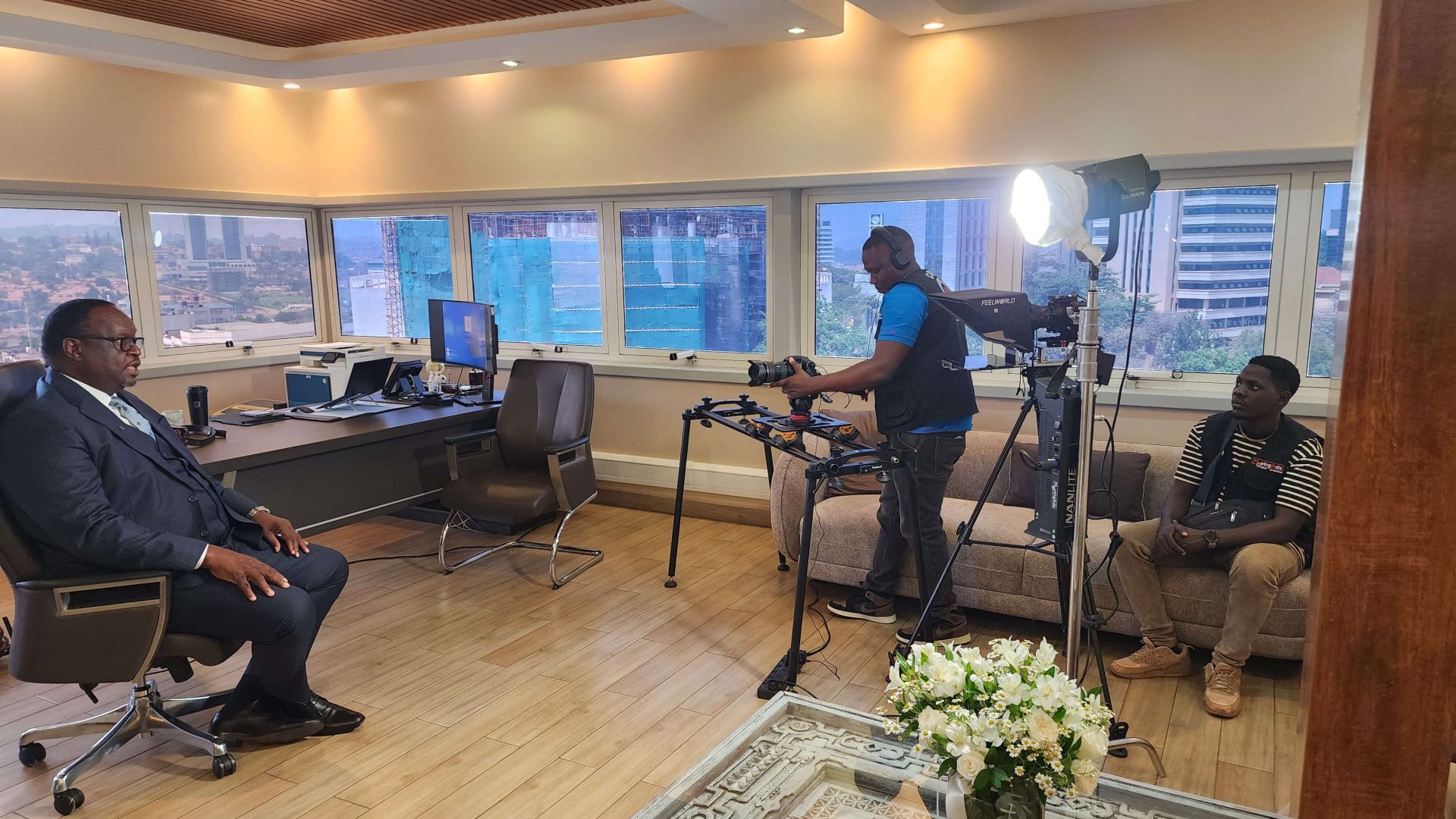
For many business leaders, stepping in front of a camera feels very different from speaking in a meeting or presenting to a team. Teleprompters in corporate videos help leaders deliver clear messages without worrying about memorizing every word. They allow speakers to focus on confidence, eye contact and connecting naturally with the people watching.
At Moving Ads Uganda, we regularly work with executives, managers, technical experts and other professionals who have important stories to tell. Some feel comfortable on camera immediately. Others need a little support to settle into the experience.
That support is part of good professional video production. A successful shoot does not only depend on cameras, lighting and sound. The people appearing on screen also need to feel prepared.
What Does a Teleprompter Actually Do?
A teleprompter displays a script close to the camera lens so the speaker can follow their words while continuing to face the camera. This makes it easier to deliver prepared messages without constantly looking down at notes or trying to memorize long paragraphs.
The idea is simple, but using a teleprompter effectively requires preparation. The script needs to sound conversational, the scrolling speed needs to match the speaker, and the person on camera still needs to understand what they are saying.
A teleprompter should support the speaker, not control them.
That is especially important in corporate video production, where audiences want to hear from real leaders and experts rather than watch someone simply recite a script.
They Reduce the Pressure of Memorizing Scripts
One of the biggest challenges during executive interview videos is remembering exact wording.
A CEO may need to communicate a new strategy. A communications manager may need to explain a programme. A technical expert may have statistics, product details or important terminology that must remain accurate.
Trying to memorise everything can place unnecessary pressure on the speaker.
Instead of thinking about how to communicate the message, they start thinking about what sentence comes next.
Teleprompters remove much of that pressure. The speaker can see the message in front of them and concentrate more on tone, expression and delivery.
For businesses, this can also make production more efficient because fewer takes may be needed when speakers can stay on track.
Teleprompters Help Maintain Eye Contact
Good communication feels personal.
When someone speaks directly towards the camera, viewers feel as though the speaker is addressing them. However, if the speaker keeps looking towards a printed script or someone standing beside the camera, that connection can quickly disappear.
A properly positioned teleprompter keeps the script close to the camera lens, helping the speaker maintain a more direct line of sight. This is one of the main reasons teleprompters in corporate videos work so well for direct-to-camera communication.
This can be useful for CEO messages, company announcements, training videos, internal communication videos, annual reports and other forms of corporate storytelling videos.
However, natural eye contact still requires practice. If someone reads too quickly or follows every word too closely, viewers may notice the movement of their eyes.
That is why rehearsal remains important.
Why Teleprompters in Corporate Videos Improve Message Clarity
One common concern is that using a script will make someone sound unnatural.
Usually, the problem is not the teleprompter. It is the way the script has been written or delivered.
Corporate scripts should sound like spoken language, not a formal report copied into a teleprompter.
Short sentences help. Familiar words help. Natural pauses also give speakers space to breathe and emphasise important ideas.
Before recording, we also encourage speakers to read through their script and make changes to phrases that do not sound like something they would normally say.
The goal is not perfection. The goal is clarity and authenticity.
Video production experts also recommend writing conversational scripts and rehearsing them before recording so the person on camera feels comfortable with the message.
They Keep Important Brand Messages Consistent
Some corporate productions require very specific communication.
A company may need to announce financial results, introduce a new service, communicate organisational changes or explain a complex project. In these situations, missing one important sentence can change the meaning of the entire message.
Teleprompters help speakers stay close to approved wording.
This becomes especially useful when the video forms part of branded content production, commercial video production, training material or a wider marketing campaign.
The message remains consistent while the speaker still has room to deliver it with personality.
For companies operating across Uganda, East Africa and wider African markets, this can also help when producing several versions of one message for different audiences.
Teleprompters Can Save Time During Production
Corporate teams are busy.
When a CEO, managing director or department head has given an hour for filming, the production team needs to use that time well.
Without proper preparation, a short statement can turn into many retakes because the speaker keeps forgetting lines or losing their place.
Using teleprompters in corporate videos gives the speaker a clear structure from beginning to end.
That does not mean every video becomes a single take. Directors may still repeat sections to improve energy, pronunciation, pace or emphasis.
However, having the script available makes the process easier to manage.
The same thinking applies across TV commercials, documentary interviews and video podcasts. Good preparation gives people confidence before the camera starts rolling.
When Should You Use a Teleprompter?
A teleprompter works best when the exact wording matters.
It can be especially useful for executive messages, company profile videos, scripted presentations, training videos, policy communication, product launches and formal announcements.
However, not every production needs one.
For documentaries, testimonials and some interview-led videos, a natural conversation may create stronger results. In those cases, a director can guide the speaker through questions rather than asking them to follow a complete script.
Good production is about choosing the right approach for the message.
A professional documentary production company, for example Moving Ads , may rely more heavily on interviews and real conversations. A corporate announcement may need tighter scripting. A video podcast might combine prepared talking points with spontaneous discussion.
The format should always serve the story.
How Teleprompters in Corporate Videos Improve Delivery
A teleprompter is only one part of a professional production.
Strong videos still need a clear idea, good scripting, appropriate lighting, clean sound, thoughtful camera work, confident directing and careful editing.
Most importantly, the person speaking needs to feel comfortable.
At Moving Ads Uganda, our approach is to create an environment where people can concentrate on what they know best. Whether we are working on corporate films, documentaries, TVCs, podcasts or social media content creation, we want the people behind the brand to come across as knowledgeable, confident and human.
That is what audiences connect with.
Tell Your Story With Confidence
Your company already has people with valuable knowledge, experience and stories. The challenge is making sure that expertise comes across clearly when the camera starts recording.
The right production process makes that easier.
If your organisation is planning a corporate video, executive message, documentary, TV commercial, podcast or branded content project, Moving Ads Uganda can help you plan, produce and deliver it professionally from concept to final edit.
Talk to the Moving Ads Uganda team or send us your brief and let us help you tell your story confidently and beautifully.
