

The commercial video production cost in Uganda can vary greatly from one project to another. A simple product video filmed in one location may require a small crew and one production day, while a television commercial could involve actors, multiple locations, specialised equipment, set design and several days of post-production. Therefore, understanding what goes into a quotation helps brands make better production decisions instead of comparing prices without considering the scope of work.
For businesses planning TV commercials, digital campaigns, product launches or branded videos, the most important question is not simply, “How much does a video cost?” A better question is, “What does this production need to achieve, and what resources will it take to achieve it well?”
What Determines Commercial Video Production Cost?
Several factors shape the final quotation for a commercial.
The idea itself is usually the starting point. Once the production team understands the concept, they can determine the crew, equipment, locations, talent, shoot duration and post-production requirements.
As a result, two 30-second commercials can have completely different budgets.
One may feature a single presenter in a controlled studio. Another may require several actors, vehicles, multiple locations, drone footage, special lighting and visual effects.
The final duration alone does not determine the cost.
The Creative Concept Sets the Direction
A strong commercial starts with an idea that supports the business objective.
Before production begins, the creative team may need to develop the concept, write the script, create a storyboard and prepare a shot list.
A straightforward product demonstration may require limited development. However, a narrative commercial with several scenes and characters usually needs more planning.
For example, an FMCG commercial showing a family using a product at home will require more preparation than a simple product shot against a studio background.
Therefore, the complexity of the creative concept directly influences the commercial video production cost.
Professional planning also helps avoid unnecessary expenses later because the production team knows what needs to happen before arriving on set.
How Crew Size Affects video Production Costs
Commercials rarely depend on one person.
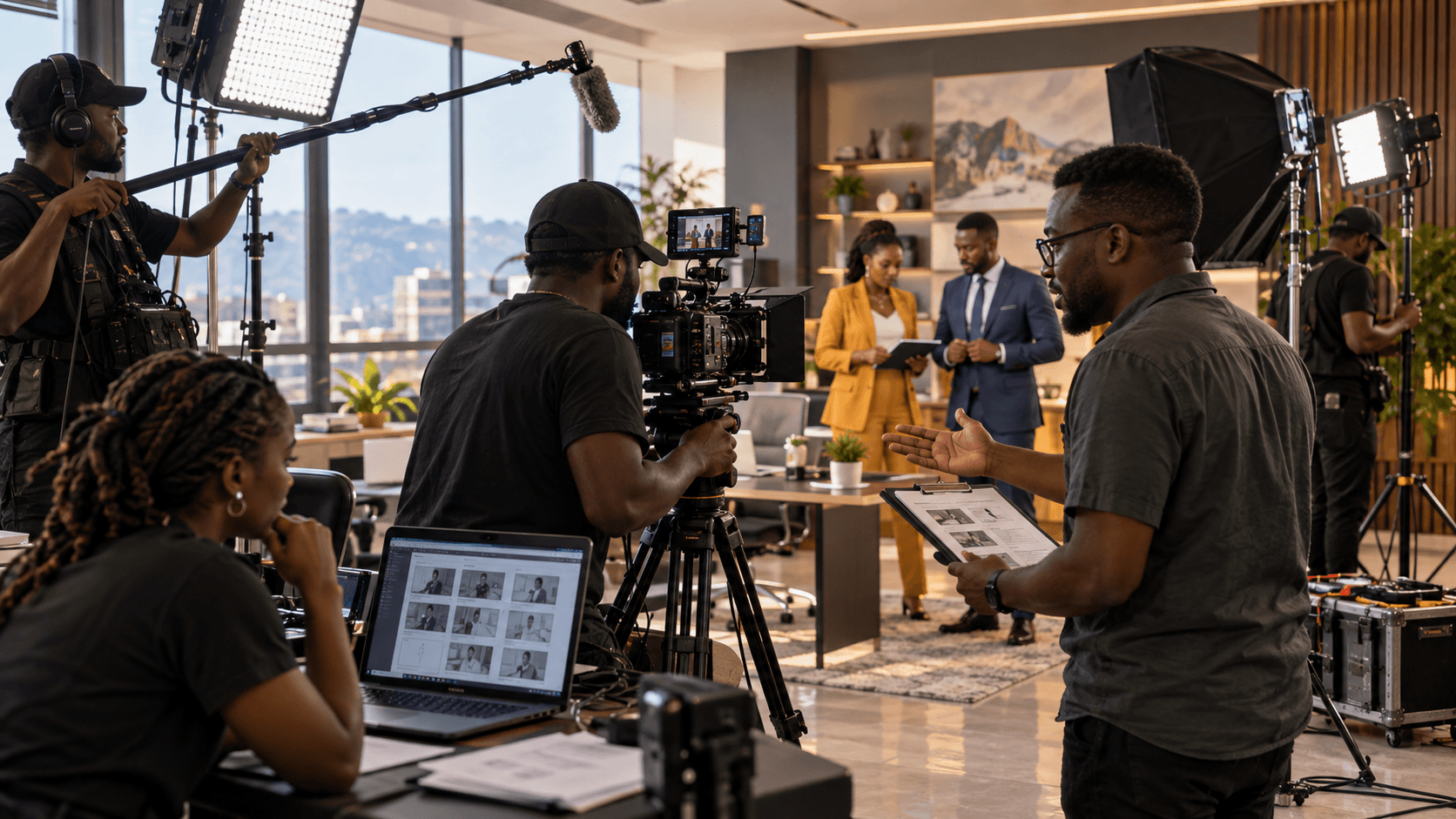
Depending on the project, a production may include a director, producer, cinematographer, camera operators, lighting technicians, sound technicians, production assistants, art directors, stylists and makeup artists.
A smaller professional video production may only require a compact crew. In contrast, larger TV commercial production usually needs more specialists because each department handles a specific part of the production.
More crew members increase the budget. However, they can also make a complicated shoot more efficient.
The goal should not be to hire the largest possible team. Instead, the production company should build the right team for the concept.
Camera, Lighting and Production Equipment
Equipment also affects the budget.
Some commercials can achieve the required look with a standard professional camera package. Others need cinema cameras, specialised lenses, large lighting setups, stabilisers, cranes, drones or other equipment.
For example, a commercial that requires smooth movement through a large building may need specialised camera support. Meanwhile, an automotive commercial may require equipment that can safely capture moving vehicles.
Therefore, the production approach should determine the equipment rather than using expensive gear simply because it is available.
Good commercial video production balances visual quality with what the project actually needs.
Locations Can Add More Than Just a Venue Fee
Locations affect more than the appearance of the commercial.
A production may need to pay for location access, transport equipment, control noise, provide power or manage people working around the set.
Furthermore, filming at several locations increases travel and setup time.
Imagine a campaign that requires scenes in an office, supermarket and family home. Even if each scene is short, the crew must pack equipment, move to the next location and rebuild the lighting setup.
Consequently, additional locations can increase both the schedule and the commercial video production cost.
Studio or Location?
Studios offer more control over lighting, sound and access.
However, real locations can provide authenticity that would be expensive to recreate.
The right option depends on the story.
Talent Costs In Commercial Video Production
People appearing on screen also influence the production budget.
A commercial may need professional actors, presenters, models, extras or voice-over artists. Fees can vary according to experience, role, shoot duration and how the brand intends to use the finished commercial.
For instance, a national television campaign may have different talent requirements from a short social media advertisement.
Wardrobe, makeup and styling may also become necessary depending on the creative direction.
Meanwhile, some product commercial production can rely entirely on products, hands or environments without showing identifiable talent.
Again, the concept determines the resources.
More Shoot Days Usually Mean Higher Costs
Time on set has a major effect on production budgets.
A carefully planned commercial may take one day to film. However, a more complicated campaign could require several shoot days.
Every extra production day may involve crew fees, equipment rental, transport, locations, catering and other logistics.
Therefore, reducing unnecessary shoot days can help control the commercial video production cost.
However, rushing a production just to save a day can create other problems. The crew may miss important shots or have less time to refine performances and lighting.
Good pre-production helps teams create realistic schedules before filming begins.
Set Design, Props and Styling
Sometimes the environment already provides everything the scene needs.
Other times, the production team needs to build the world around the commercial.
An art department may need to source furniture, decorate a room, build a set, find props or modify an existing location.
For FMCG and retail commercials, product presentation may require considerable attention because packaging, food styling and surrounding objects need to look right on camera.
These details often appear simple in the finished advertisement. However, creating them can require significant preparation.
Post-Production Costs Can Vary Widely
Filming is only one stage of the process.
After the shoot, editors need to organise footage, select the strongest takes and build the final commercial.
Then the project may require colour grading, sound mixing, music, titles and graphics.
Some projects also need motion graphics, animation or visual effects production.
For instance, a technology commercial may need animated interfaces appearing around the actors. A beverage commercial might require detailed product clean-up or visual effects. Meanwhile, a straightforward corporate advert may need far less post-production.
As the editing requirements increase, so does the time required to finish the project.
Therefore, post-production can significantly influence the commercial video production cost.
Multiple Deliverables Can Change the Scope
Today, brands rarely produce one commercial for one platform.
A campaign may require a 30-second television commercial, a 15-second version, short vertical videos, YouTube formats and social media cutdowns.
Creating these additional versions often gives brands more value from the original shoot.
However, the production team still needs to plan, edit and export each version correctly.
This is particularly important for campaign video production, digital advertising videos and social media ads production.
Therefore, brands should identify the required deliverables at the beginning rather than requesting additional versions after the main edit is complete.
How Can Brands Manage Commercial Video Production Costs?
The easiest way to control a production budget is to create a clear brief.
Explain the business objective, audience, platforms, intended video length and expected deliverables.
Then allow the production team to recommend the most practical creative approach.
Sometimes a simpler idea can communicate the message more effectively than an expensive production.
Likewise, filming several related assets during one shoot can reduce the need to organise separate production days later.
Brands should also discuss the budget early. A professional production company can then shape the concept around realistic resources.
The goal is not always to make the cheapest video. Instead, it is to spend the available budget where audiences will notice the difference.
Conclusion
There is no single commercial video production cost that applies to every project in Uganda. The final budget depends on the concept, planning, crew, equipment, talent, locations, production days and post-production involved.
A 30-second commercial can be simple or highly ambitious. Therefore, brands should compare quotations based on what each production actually includes rather than looking at the final figure alone.
For organisations planning commercial video production, product campaigns or TV advertising in Uganda and East Africa, a detailed brief is one of the best places to start.
If your brand is planning a commercial, Moving Ads Uganda can help you break the idea into the practical production requirements that affect the budget. Share the objective, audience and intended platforms first, then build a production approach that puts the budget where it will have the strongest impact.
