

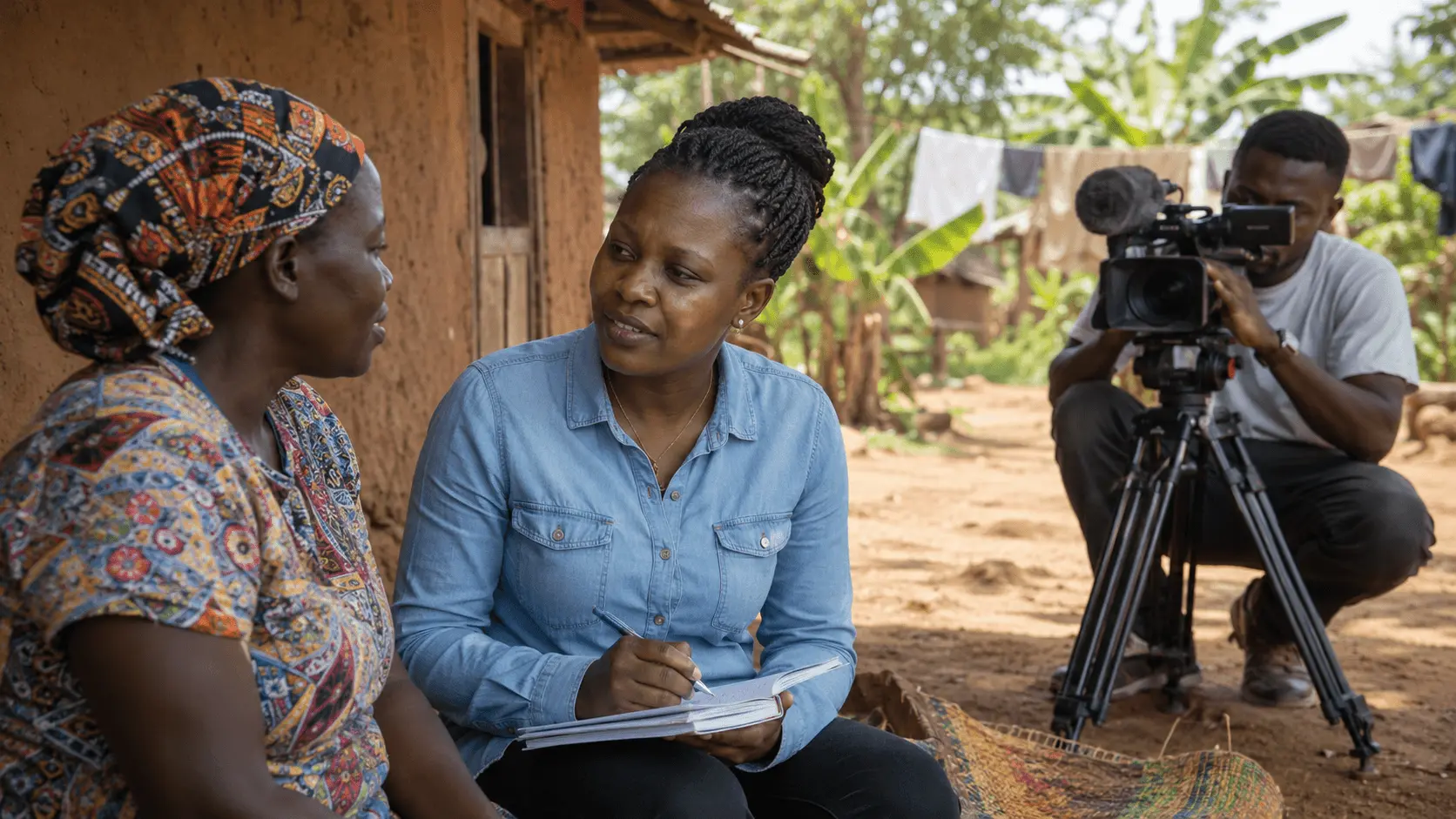
Impact storytelling videos help donors see more than project statistics. They reveal the people, decisions and changes behind the numbers. For NGOs, development agencies and social enterprises in Uganda and East Africa, a powerful story can turn a routine project update into a memorable account of progress. Here is why donors welcome powerful stories.
Donors need more than information
Most donor reports include useful facts. They show how many people joined a programme, how teams used funds and whether a project met its targets. These details support accountability, but facts alone rarely communicate the full meaning of the work.
A donor may learn that an agriculture programme trained 500 farmers. However, one farmer’s experience can explain what that training achieved. Perhaps she increased her harvest, paid school fees or hired other people in her community. Her story gives the figure context.
Strong donor communication combines evidence with human experience. Data proves scale, while personal stories help audiences understand what that scale means in everyday life.
Powerful stories simplify complex development work
Development programmes often involve several partners, technical processes, policy goals and long implementation periods. A short report or presentation may struggle to explain how all these parts connect.
A well-planned donor project documentary can guide viewers through the issue, the intervention and the outcome. It can introduce the people involved, explain the organization’s approach and show how the project changed lives or systems.
A clear donor story should answer five questions:
What problem did the community face? Who experienced it? What action did the organization take? Any changes ? What still needs attention?
This structure helps the audience follow the story without oversimplifying the work. Credible organisations acknowledge both progress and unfinished work instead of presenting every project as a complete success.
Stories create an emotional connection
People often care more deeply when they can relate to someone within a story. A parent discussing healthcare, a young entrepreneur describing their first business opportunity or a teacher explaining changes in a classroom can make a development issue feel immediate.
Organisations that invest in NGO video production in Uganda should never manufacture this emotional connection. The production team should listen carefully, ask thoughtful questions and give contributors enough space to speak naturally.
Good interviews do not force people to deliver perfect statements. Instead, they encourage honest memories, specific examples and personal reflection. Local languages, familiar settings and natural pauses can strengthen credibility because they allow contributors to communicate in their own way.
Specific details build donor trust
Donors want to know how an organisation created change. Broad claims such as “we transformed the community” rarely offer enough proof. Viewers need to see what changed, why it changed and who can confirm the result.
Impact storytelling videos can combine interviews, project footage, expert commentary and measurable results. For example, an agriculture documentary may show farmers at work, training sessions, improved production methods and access to new markets. Programme staff can then explain how the intervention supported those outcomes.
Specific details make a story believable. They also help organisations avoid exaggerated language that may weaken trust. When the story clearly connects activities to results, donors can judge the project’s value with greater confidence.
Video and podcasts support different communication goals
Video works well when people, locations and visible results form the heart of the story. It allows donors to enter places they may never visit and notice details that written reports cannot easily capture.
Podcasts create room for longer conversations. Project leaders can discuss lessons, partners can explain implementation challenges and community members can share experiences in greater depth.
Organisations do not always need to choose one format. A documentary production in Uganda can provide the main visual story, while podcast episodes, interview clips and short social videos can continue the conversation across several platforms.
Ethical storytelling protects dignity
Every strong story begins with respect. Contributors should understand why the team wants to film them, where the content will appear and who may see it. They should also feel free to decline or withdraw their participation.
Production teams must consider privacy, culture, personal safety and emotional wellbeing. They should avoid questions or images that expose people to unnecessary harm.
In Uganda and across East Africa, ethical storytelling also requires balanced representation. Organisations should not portray communities only through hardship. People contribute ideas, labour, leadership and local knowledge to development work. A good story recognises that agency and presents contributors as active participants in change.
How to plan a donor story that works
Start with one clear communication goal. Do you want to report progress, attract new funding, share lessons or increase public awareness? This goal should guide the story, interview choices and final format.
Next, identify contributors whose experiences genuinely reflect the project. Brief them before the interview, but avoid rehearsing every answer. Natural responses usually sound more trustworthy than scripted testimonials.
Then gather evidence that supports each claim. Use project data, footage of activities, partner interviews and examples of real outcomes. Finally, plan distribution before filming. This step helps the production team capture material for the main documentary, social media clips, presentations, podcast episodes and website content.
Powerful stories move donors from understanding to action
Donors respond to powerful stories because stories make impact easier to understand, remember and share. When organisations combine strong evidence, honest voices and ethical production, they build trust without relying on pressure or exaggeration.
The goal should not simply involve producing a beautiful video. The story should communicate the truth of the work, respect every contributor and give donors a clear reason to remain engaged.
Moving Ads Uganda works with NGOs, development partners and purpose-led organizations to create documentaries, impact storytelling videos and podcast content centered on real people and meaningful outcomes. Contact our team to discuss how we can plan, film and share your next project story with the audiences who need to see it.
