

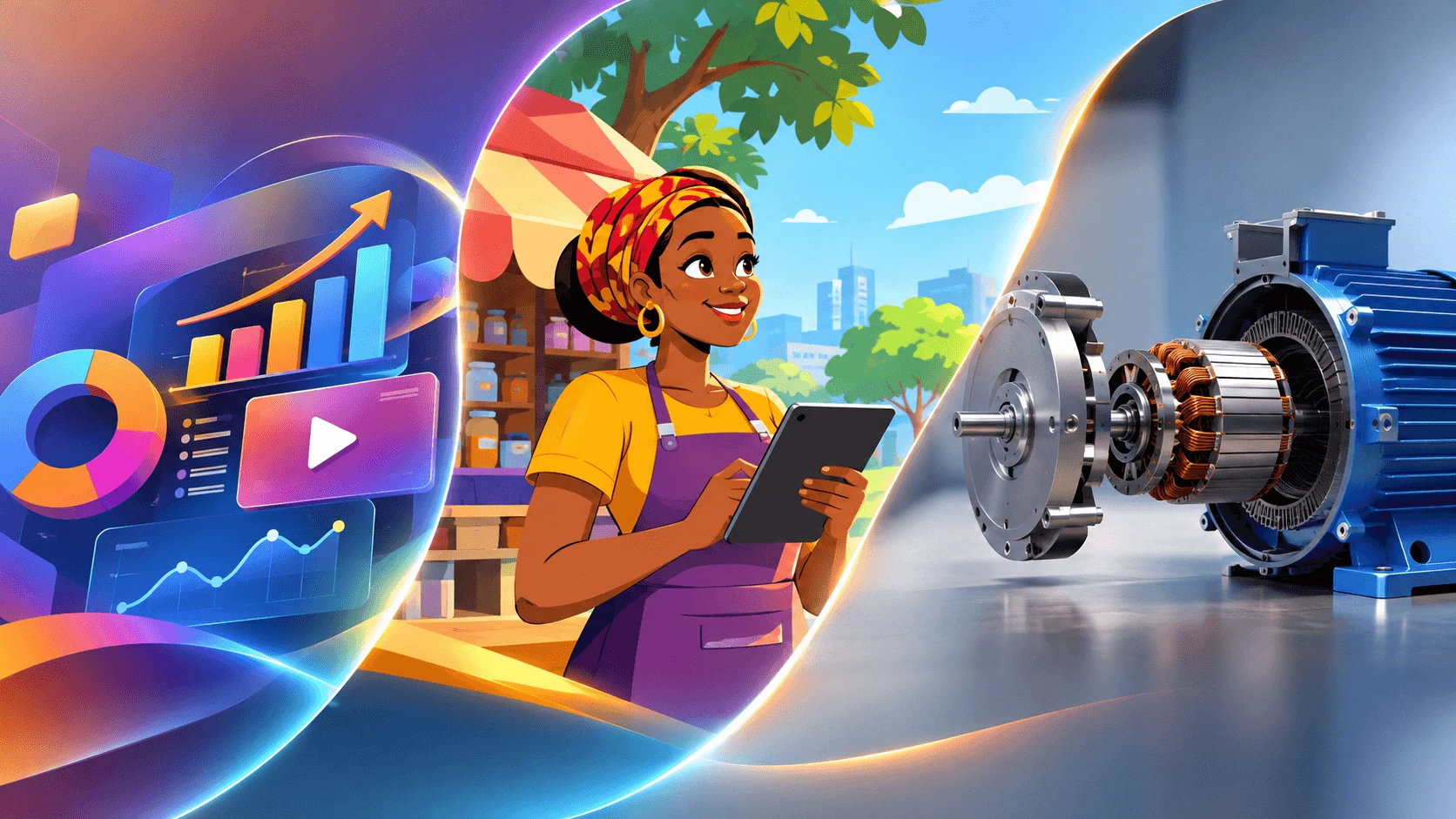
Animation for businesses offers a powerful way to communicate ideas, explain products and connect with customers. However, not every animation style serves the same purpose. Choosing the wrong format can affect how well your audience understands your message.
Motion graphics, 2D animation and 3D animation each offer different creative possibilities. Some work better for presenting information, while others excel at storytelling or demonstrating technical products.
Therefore, understanding these differences can help businesses make better creative decisions. It can also help them invest in content that supports their marketing objectives.
Why Businesses Need a Clear Animation Strategy
Before choosing an animation style, businesses should identify what they want to achieve. Is the goal to educate customers, introduce a product, explain a service or increase brand awareness?
For example, a bank introducing a mobile banking service may need simple animated instructions. Meanwhile, a manufacturing company may require detailed visuals showing how its equipment operates.
Although both businesses need animation, their communication objectives are different.
Effective animation for businesses begins with understanding the audience and selecting a format that supports the intended message.
## Motion Graphics for Clear and Engaging Communication
Motion graphics bring graphic design elements to life through movement. They combine animated typography, icons, illustrations, charts and visual transitions to communicate information.
Unlike character-driven animation, motion graphics primarily focus on presenting information in an engaging way.
For instance, a financial institution can use animated charts to present its annual performance. Similarly, a telecommunications company can introduce a new data package through animated text and graphics.
Motion graphics also work well alongside traditional video production. They can highlight important information, introduce speakers or explain statistics within corporate videos.
When Should Your Brand Choose Motion Graphics?
Motion graphics are particularly effective when businesses need to communicate information quickly and clearly.
They are suitable for:
– Corporate presentations and reports
– Animated logos and brand identities
– Infographic animation videos
– Social media advertisements
– Product announcements
– Event opening videos
– Financial and statistical presentations
Furthermore, motion graphics can strengthen corporate video production without requiring an entirely animated video.
2D Animation for Storytelling and Customer Education
2D animation uses two-dimensional characters, illustrations, objects and environments to communicate ideas.
Its greatest strength lies in storytelling. Businesses can create relatable characters and situations that help customers understand products or services.
For example, an insurance company can create an animated story about a family facing unexpected medical expenses. The story can demonstrate how insurance coverage provides financial protection.
Similarly, NGOs can use educational animation videos to communicate public health messages and community development initiatives.
Through storytelling, businesses can explain unfamiliar concepts in ways that feel relevant to their audiences.
When Should Your Brand Invest in 2D Animation?
2D animation works particularly well when businesses want to educate, entertain or connect emotionally with customers.
Common applications include:
– Animated explainer videos
– Character-based commercials
– Customer education campaigns
– Employee training videos
– Public awareness campaigns
– Product and service introductions
– Educational content
In addition, 2D animation allows brands to create environments and situations that may be difficult or expensive to film.
3D Animation for Realistic Product Visualisation
3D animation creates digital objects, characters and environments with height, width and depth. It allows audiences to explore products from different angles and see details that traditional cameras cannot capture.
For example, an engineering company can demonstrate the internal components of industrial equipment. Likewise, a healthcare company can illustrate how a medical device operates.
Real estate developers can also use 3D animation to create virtual walkthroughs of buildings before construction begins.
As a result, businesses can demonstrate products and environments even before they physically exist.
When Does Your Brand Need 3D Animation?
3D animation is particularly valuable when businesses need realistic visuals or detailed technical demonstrations.
It is suitable for:
– Product explainer videos
– Architectural visualisation
– Medical and scientific demonstrations
– Engineering and manufacturing processes
– Product launch videos
– Animated commercials
– Technical equipment demonstrations
Furthermore, 3D animation can enhance commercial video production by presenting products in creative environments that would be difficult to recreate physically.
## Comparing Motion Graphics, 2D Animation and 3D Animation
The main differences between these animation formats involve their appearance, communication purpose and production requirements.
Motion graphics work well for presenting information, statistics and brand messages. Their strength lies in making information visually engaging and easy to follow.
On the other hand, 2D animation is particularly effective for storytelling, customer education and character-based communication.
Meanwhile, 3D animation offers greater flexibility when demonstrating physical products, technical systems and realistic environments.
Production requirements also differ between these formats. A simple motion graphics video may require fewer resources than a detailed 3D product demonstration.
However, complexity varies considerably. A sophisticated 2D animated commercial may require more time and resources than a simple 3D animation.
Therefore, investing in animation for businesses requires careful consideration of the project rather than assumptions about individual formats.
Choosing the Right Animation Style for Your Marketing Goals
The best animation style depends on what your audience needs to understand.
For instance, a business introducing a new financial service may benefit from motion graphics. Animated icons and illustrations can explain registration procedures, payment options and service benefits.
However, a company running a customer awareness campaign may achieve better results through 2D animation. Relatable characters can make the message easier to understand and remember.
Similarly, a company launching technical equipment may benefit from 3D animation. Detailed product visualisations can demonstrate features, internal mechanisms and practical applications.
Your target audience also matters. Technical professionals may appreciate detailed demonstrations. Meanwhile, general consumers may respond better to simple illustrations and relatable stories.
Ultimately, the animation style should support your communication objectives rather than distract from them.
How Businesses Can Combine Animation Styles
Businesses do not always need to choose a single animation format. Combining different styles can create more engaging and informative content.
For example, a product commercial can use 3D animation to showcase a product. Motion graphics can then highlight its features, while 2D illustrations demonstrate customer benefits.
Similarly, an explainer video can combine live-action footage with animated graphics and technical visualisations.
This approach gives businesses greater creative flexibility. It also allows production teams to select the most suitable visual technique for each part of the message.
Getting More Value From Your Animation Budget
A well-planned animation project can serve multiple business objectives beyond its original purpose.
For instance, businesses can adapt a product explainer video into shorter advertisements for Instagram, TikTok, Facebook and YouTube.
In addition, animated content can support sales presentations, employee training, customer onboarding and product demonstrations.
Businesses can also incorporate animation into their social media content creation and digital advertising videos.
However, attractive visuals alone do not guarantee effective communication. A clear script, thoughtful creative direction and consistent branding are equally important.
Therefore, animation for businesses should form part of a wider communication and marketing strategy.
Motion graphics, 2D animation and 3D animation each offer unique advantages. However, the right choice depends on your brand’s objectives, audience and communication needs.
Motion graphics simplify information and strengthen brand messaging. Meanwhile, 2D animation brings stories and characters to life. 3D animation provides realistic product visualisation and detailed technical demonstrations.
Ultimately, effective animation for businesses is not about choosing the most sophisticated visual style. It is about selecting an approach that communicates your message clearly and delivers value to your audience.
At Moving Ads , we help businesses communicate through motion graphics, 2D animation, 3D animation and professional video production.
Whether you need an animated commercial, a product demonstration or an educational explainer video, we can help.
Our creative team works with businesses to develop visual content that supports their communication and marketing objectives.
Contact us today to discuss the right animation solution for your brand.
