

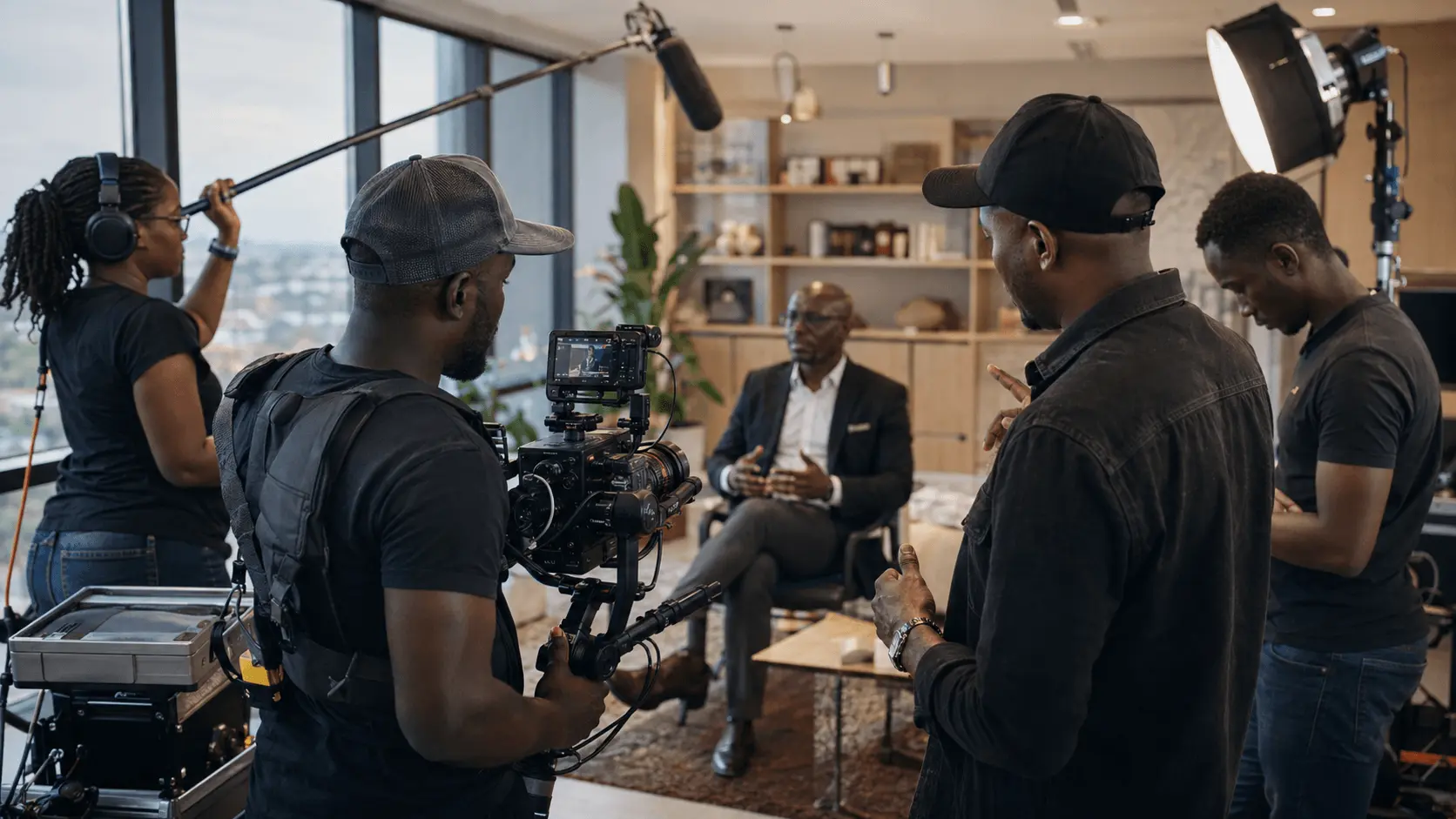
A polished corporate film, documentary, commercial or branded video may only last a few minutes, but creating it takes much more than turning on a camera. Behind the scenes video production brings together planning, storytelling, directing, lighting, sound, camera work and editing to turn an idea into a finished piece of content that connects with an audience.
For businesses in Uganda and across East Africa, understanding what happens during a professional video shoot can also help you prepare better for your next production. Whether you want a corporate film, documentary, advertisement, podcast or social media campaign, the quality of the final video often depends on the work that happens before, during and after the camera starts recording.
Here is what actually goes into a professional production.
1. Every Professional Video Shoot Starts Before Shoot Day
A strong video starts with a clear purpose.
Before the crew packs cameras or sets up lights, the production team needs to understand what the client wants to communicate, who needs to hear the message and what action the audience should take afterwards.
This stage forms the foundation of professional video production.
The team may develop a concept, write a script, create a storyboard, identify interview subjects, scout locations and prepare a shooting schedule. For larger commercials and corporate films, the team may also plan wardrobe, casting, props, set design and logistics.
A good pre production checklist keeps everyone working towards the same goal. It also helps the production team identify potential problems before shoot day.
For example, if a company wants to film interviews at its Kampala office, the team should check the available space, natural light, background noise, power access and room layout before production begins. These details may seem small, but they can affect the quality of the final video.
For a deeper look at how planning, filming and editing work together, Adobe offers a useful guide to the video production process.
Why planning matters
Good preparation gives the crew more time to focus on creativity during the shoot.
Instead of solving preventable logistical problems on location, the director can concentrate on performance, storytelling and visual quality.
2. The Crew Arrives Before the Cameras Roll
Professional shoots rarely begin the moment the client arrives.
The crew usually reaches the location earlier to prepare the space. Camera teams assemble equipment, lighting crews shape the scene, sound teams test microphones and producers confirm the schedule.
Depending on the production, the crew may include a producer, director, cinematographer, camera operators, sound recordist, production assistants, gaffer, makeup artist, stylist and other specialists.
Not every shoot needs a large crew. A documentary interview may only require a small team, while a television commercial may involve dozens of people.
What matters most is having the right people for the job.
For businesses comparing corporate video production Uganda options, crew size should not be the only measure of professionalism. A strong production company builds a team around the requirements of the story rather than bringing unnecessary equipment and personnel.
3. Lighting Shapes the Look of the Video
Lighting can completely change how a location looks on camera.
A normal office boardroom, hotel room, factory floor or outdoor location can look polished and cinematic when the crew controls the light carefully.
The cinematographer and lighting team consider where the subject will stand, how natural light enters the room and what mood the scene should create.
For an executive interview, the crew may use soft lighting to create a confident and professional appearance. A commercial may need a more dramatic setup, while a documentary often works best when the lighting feels natural and unobtrusive.
Finding the best lighting for video production does not always mean using the biggest lights available. It means choosing light that supports the story, the subject and the location.
4. Sound Matters Just as Much as the Picture
Audiences may forgive a slightly imperfect image, but poor sound can quickly make a professional video difficult to watch.
Before recording an interview, the sound team checks microphones, listens for background noise and monitors every take.
Traffic, air conditioners, generators, construction work and even people talking in nearby rooms can create problems.
This becomes especially important during documentary production Uganda, where crews often work in real environments that they cannot fully control.
Podcast production also depends heavily on good sound. Whether a company records a video podcast in a studio or an interview at an event, clear audio allows the audience to focus on the conversation instead of distractions.
5. The Director Connects Everything
While many people contribute to a production, the director keeps the creative vision consistent.
The director works with presenters, actors, executives or interview subjects to help them feel comfortable on camera. They also work closely with the cinematographer to decide how the camera should frame and move through each scene.
Sometimes a director asks for several takes of a simple action.
That does not always mean someone made a mistake.
One take may focus on performance, another may give the editor a different camera angle, and another may improve timing.
During behind the scenes video production, you quickly notice how many small decisions shape a scene that may last only five seconds in the final edit.
6. Cameras Capture More Than the Main Action
A professional production rarely records only the obvious shot.
After filming an interview, for example, the crew may capture the speaker working at a desk, interacting with colleagues, walking through the office or visiting a project site.
Production teams call this supporting footage B-roll.
B-roll helps editors tell the story visually instead of relying on someone talking throughout the entire video.
Documentaries often depend heavily on these moments. An interview with a farmer can explain the impact of an agricultural program, but footage of that farmer working, interacting with family or demonstrating a change makes the story more engaging.
The same principle applies to corporate films, NGO documentaries, branded content and television commercials.
7. The Shoot Does Not End When the Camera Stops
Once the crew finishes filming, post-production begins.
Editors organise footage, review interviews, select the strongest moments and build the first version of the story.
A professional video editing workflow may include editing, sound mixing, colour correction, motion graphics, subtitles, music selection and visual effects.
The editor also considers where audiences will watch the content.
A television commercial may require one format, while Instagram, TikTok, LinkedIn and YouTube may need different versions. A podcast production might include a full episode, shorter video clips and social media highlights from one recording session.
This approach allows businesses to get more value from each production day.
8. Client Feedback Helps Shape the Final Film
After the first edit, the client usually reviews the video and gives feedback.
Clear feedback keeps revisions efficient.
Instead of sending separate comments from several people at different times, organisations can gather feedback internally and send one consolidated response to the production team.
This allows the editor to understand the priorities and apply changes consistently.
For companies searching for a video production company Uganda businesses can work with long term, the revision process matters just as much as shoot-day execution. Good production teams communicate clearly, manage expectations and guide clients through every stage.
9. Professional Video Production Is a Team Process
The camera may attract the most attention on set, but professional production depends on much more than equipment.
Planning creates direction. Lighting creates mood. Sound creates clarity. Directing shapes performance. Cinematography creates the visual language. Editing turns separate pieces into one story.
That is the real value of behind the scenes video production. It shows that strong videos come from a structured creative process rather than one person simply pointing a camera at a subject.
For brands, corporations, NGOs and organisations across Uganda and East Africa, understanding that process can make the next production smoother, more efficient and more successful.
Ready to Bring Your Next Story to Life?
Whether you need a corporate film, television commercial, documentary, branded campaign, video podcast or digital content, start with a clear story and a production team that understands what you want to achieve.
At Moving Ads Uganda, we approach each project as a complete production process, from the first conversation and creative concept to filming, editing and final delivery.
If your organisation has a story worth telling, talk to Moving Ads Uganda about your next video production, documentary or podcast project.
